

Discovering Estonia and Finland: a student adventure in education and culture

With its medieval streets and buildings, Tallinn Old Town is a place where history comes alive at every corner. The group takes a photo at a place overlooking the Saint Olaf’s Church. The church was used as a radio transmission tower during the Soviet era.

Students learn about the history of Estonia through a walking tour and learning activity at Tallinn Old Town, a UNESCO World Heritage site.
From 11 to 20 June 2025, 12 local and two mainland students from four programmes within the Department of Social Sciences and Policy Studies (SSPS) participated in an experiential tour to Estonia, and Finland. The tour offered participants an in-depth understanding of Estonia’s outstanding achievements in education, its role as a leader in educational innovation and digital transformation, and its commitment to sustainable cultural heritage practices.
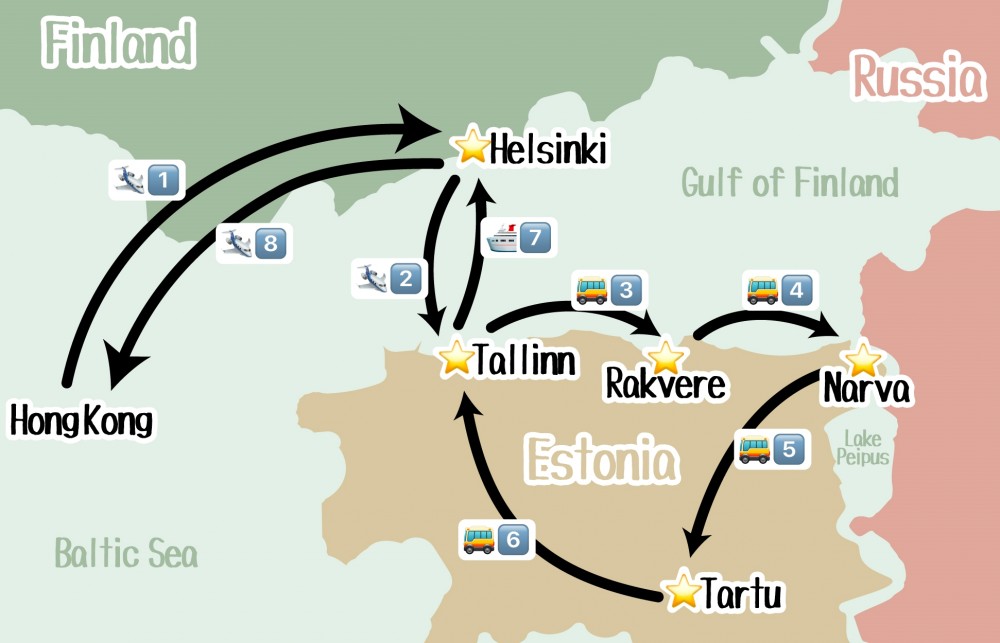
The group visited several cities across Estonia, including Tallinn, Rakvere, Narva, and Tartu, before concluding their trip with a stay in Helsinki, Finland. In Tallinn, students explored UNESCO World Heritage Sites such as Tallinn Old Town and the Struve Geodetic Arc, as well as the University of Tallinn, the Estonian History Museum, and Toompea Castle’s fortifications. In Narva and Tartu, the itinerary included visits to Narva Castle, the University of Tartu, Tartu Cathedral, and the Tartu Old Observatory. The Finnish part included visits to the UNESCO site Suomenlinna, the Uspenski Orthodox Church, and the contemporary Central Library Oodi.
The 10-day tour, titled “Exploring Estonia’s Educational Innovations and Cultural Heritage through Experiential Learning”, was funded by UGC Scheme for Mainland and Global Engagement and Student Learning Experience. While Dr Kristy Yip So-king from SSPS led the tour, participating students were drawn from the Bachelor of Education (Honours) (Geography) (BEd(GEOG)), Bachelor of Education (Honours) (Business, Accounting and Financial Studies) (BEd(BAFS)), Bachelor of Social Sciences (Honours) in Global and Environmental Studies (BSocSc(GES)), and Bachelor of Social Sciences (Honours) in Social Entrepreneurship and Development Studies (BSocSc(SEDS)) programmes.
Despite its relatively small population, Estonia has positioned itself as a leader in education, with students consistently achieving top scores in international assessments. According to the Programme for International Student Assessment (PISA) 2022 rankings published by Organisation for Economic Co-operation and Development (OECD), Estonia’s education system was rated the best among all European countries and ranked among the top four across all OCED countries, excelling in mathematics, science, and reading.

SSPS students enthusiastically engage in an exchange and networking activity at Tallinn University. In the photo, Ms Salome Khurtsidze, the International Study Programme Coordinator, is giving a presentation about the university.
During their one-day visit to the University of Tallinn, students attended a six-hour workshop that provided a comprehensive overview of Estonia’s education system, covering its strengths, challenges and future prospects. Rosanne Mun Hiu-lam, a fifth-year student in the BEd(GEOG) programme, reflected on what she had learnt about Estonia’s impressive educational success.
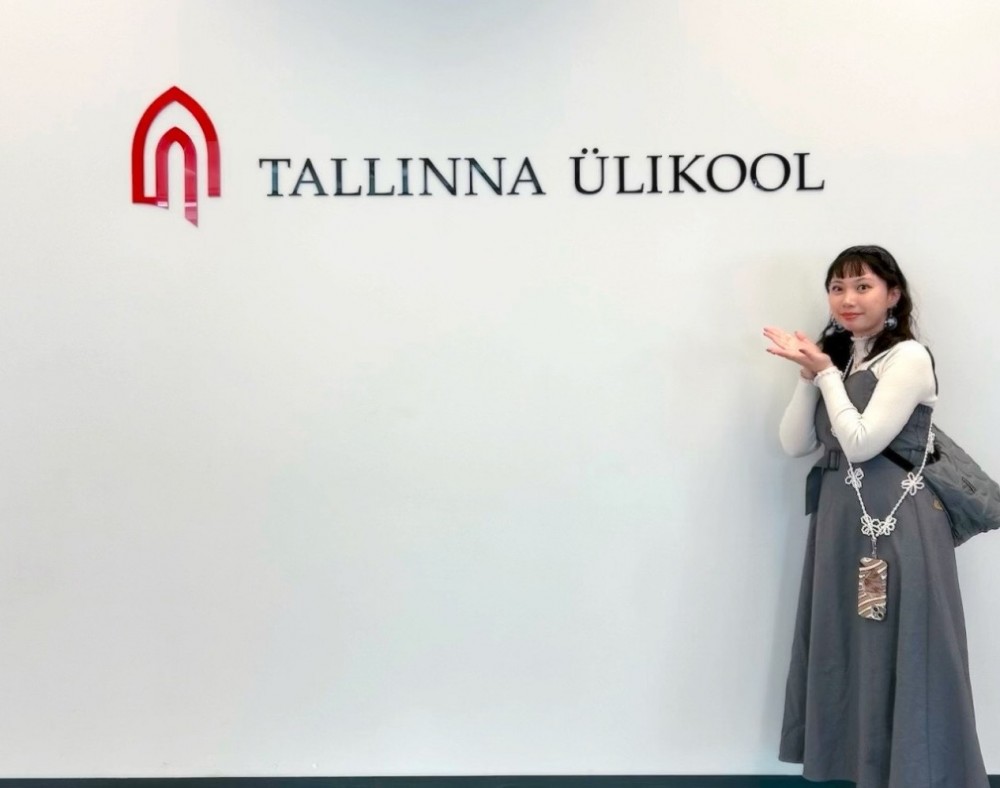
“Estonian students are encouraged to develop self-directed learning habits from an early age. Furthermore, Estonian teachers enjoy a high level of instructional autonomy, allowing them to adapt lessons to their students’ needs rather than following strict exam-focused curricula. The education system motivates students to engage actively in learning instead of rote-memorisation. I believe teachers’ autonomy and students’ self-motivation are the two key factors behind Estonia’s strong performance in education,” Rosanne said.
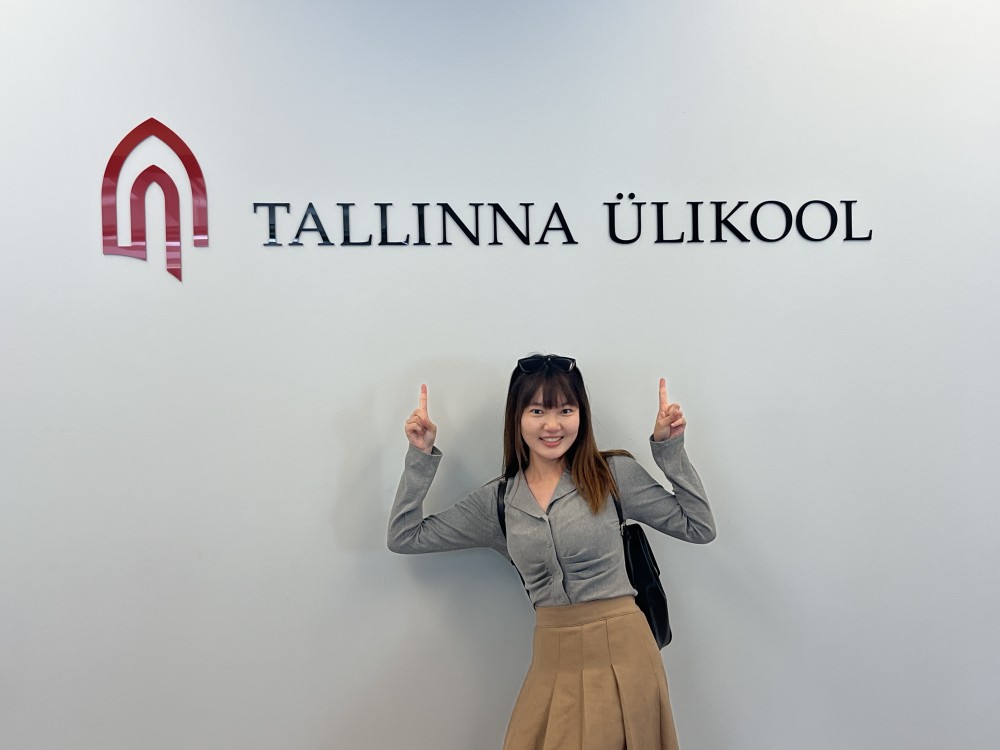
As a Baltic country, Estonia has a rich cultural and historical heritage influenced by Scandinavian, German, and Slavic cultures. Alice Li Yuen-ying, a fifth-year BEd(BAFS) student, found her experience in Estonia thought-provoking. Having previously associated Estonia mainly with digital innovation and e-government, she gained insights into how the country’s complex history and geopolitical situation have shaped the identity of its people. The tour also highlighted the essential role education plays in preserving cultural identity and fostering understanding across communities.
As an aspiring BAFS and Geography teacher, Alice plans to incorporate Estonia’s unique experiences into her teaching to enhance students’ global awareness and critical thinking skills. “In geography lessons, I intend to use Estonia’s journey toward independence and evolving national identity as a case study to illustrate the complexities of geopolitics. In BAFS classes, I will highlight the country’s pioneering digital economy and innovative e-government initiatives as examples of innovation in business and public administration,” Alice said.

In her reflection report, Alice recalls visiting Mustvee, a small town between Narva and Tartu on the western shore of Lake Peipus, as well as the Narva-Jõesuu beach. Lake Peipus is Estonia’s largest and Europe’s fifth-largest freshwater lake, bordering Russia on its eastern shore, while Narva-Jõesuu boasts the longest sandy beach in Estonia, stretching along the south coast of the Gulf of Finland.

Students take part in a walking tour at the city centre of Helsinki, Finland’s capital.

The photo is taken while the tour is on its way to the Fortress of Suomenlinna, Finland. Located about 4km southeast of the city centre of Helsinki, the UNESCO site is a popular tourist attraction for both travellers and locals.
Through workshops at Tallinn University and guided tours at the University of Tartu, students explored Estonia’s innovative pedagogy. In addition to these educational activities, the tour included visits to three UNESCO World Heritage Sites—Tallinn Old Town, the Struve Geodetic Arc, and Suomenlinna in Finland. “These workshops, guided tours and heritage visits broadened students’ global perspectives and deepened their understanding of cultural heritage preservation and sustainable development. The experience was reinforced by reflection reports on their observations and key learnings.” Dr Kristy Yip So-king noted.
Dr Yip, a scholar in hotel and tourism management from SSPS, expressed satisfaction with the results of the tour, saying it significantly enhanced participants’ understanding of Estonia’s innovative education system and heritage conservation efforts. “Students expressed high satisfaction with the tour. The immersive experience fostered cross-cultural connections, critical thinking, and increased global awareness. It exemplifies the profound impact experiential learning can have,” Dr Yip concluded.

The tour visits the Ruins of Tartu Cathedral, Estonia, also known as Dorpat Cathedral. The ruins are the remains of a former Catholic church in Tartu. Construction of the Gothic cathedral began in the 13th century, and it was one of the largest religious buildings in Eastern Europe. Dr Kristy Yip is at the far left in the front row.

Students deepen their understanding of Estonia’s history through a half-day lecture and museum visit at an UNESCO site Struve’s Geodetic Arc. The photo is taken at the function room of the Arc, with Dr Kristy Yip, third from left, Ms Niina, the professional interpreter, fourth from left, and Mr Kaarel Nõmmela, curator of Educational Activities at the University of Tartu, fourth from right, from the museum at the front.

Students deepen their understanding of Estonia’s history through a half-day lecture and museum visit at the UNESCO site Struve’s Geodetic Arc. The photo is taken in front of the University of Tartu which manages the museum and the arc.
